

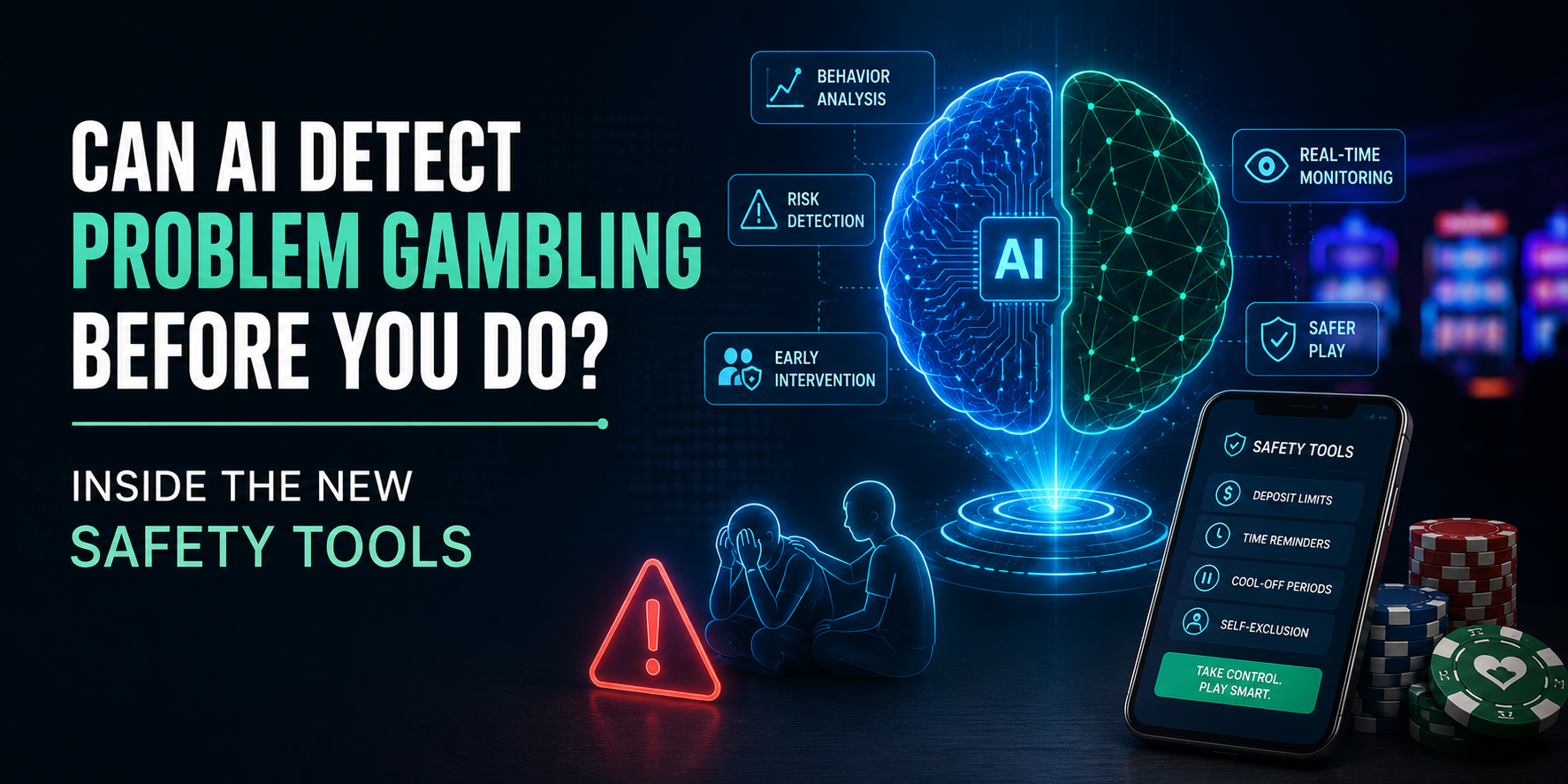
Most people who develop a gambling problem don’t notice the shift while it’s happening. The line between “having fun on a Friday night” and “chasing losses at 3am” rarely announces itself. By the time it’s obvious to the player, it’s often been obvious to their bank statement for weeks.
That gap between behaviour and self-awareness is exactly what a new generation of AI-driven safety tools is trying to close. Rather than waiting for players to self-report or self-exclude, operators are increasingly using machine learning to spot the early warning signs first — sometimes before the player would describe anything as a problem at all.
What These Tools Actually Look At
The systems behind this shift, with names like Mindway AI’s GameScanner and Playtech’s BetBuddy, aren’t reading minds. They’re pattern-matching against behavioural markers that research has consistently linked to gambling harm.
The signals tend to fall into a few recognisable categories. Loss-chasing is one of the clearest: a player who increases bet size or frequency immediately after a loss, trying to recover money rather than walking away, is showing one of the most reliable predictors of problem gambling in the academic literature. Session patterns matter too — unusually long sessions, late-night play that breaks from a player’s normal rhythm, or a sudden jump in how often someone logs in. Deposit behaviour is another major input: rapid, repeated top-ups, especially right after a loss, or deposits that climb steadily over a short window.
None of these signals on their own proves anything. A long session might just mean someone is enjoying a slow Sunday. A deposit increase might be a one-off. What the AI models are actually built to do is weigh dozens of these markers together and assign a risk score, flagging the combinations that, statistically, tend to precede real harm.
From Detection to Intervention
Spotting a risky pattern is only useful if something happens next. Most platforms using this technology pair detection with a tiered response system rather than an all-or-nothing switch.
At the lighter end, a flagged account might trigger a gentle in-app nudge: a reminder of time spent playing, a prompt to set a deposit limit, or a check-in message. Further up the scale, automated systems can apply cooling-off periods, temporary deposit caps, or session-length restrictions without requiring the player to ask for them. At the most serious end, the system escalates to a human responsible-gambling team, who review the case before deciding on account restrictions or self-exclusion.
That human layer matters more than the marketing copy around these tools usually suggests. Operators have generally settled on a hybrid model: AI does the constant, large-scale monitoring that no human team could realistically do across millions of sessions, but the consequential decisions, restricting someone’s account or imposing exclusion, are typically reviewed by trained staff rather than executed automatically. It’s a recognition that the algorithms are good at flagging risk and less reliable at handling the nuance of an individual person’s situation.
Why This Is Happening Now
This isn’t operators suddenly developing a conscience. It’s regulation catching up to what was already technically possible.
The UK Gambling Commission’s updated licence conditions, which took effect in 2026, require remote gambling licensees to run algorithmic customer interaction systems capable of identifying behavioural markers of harm, alongside a phased rollout of affordability checks that flag financially vulnerable players using shared credit data. The Netherlands’ regulator has pushed in a similar direction, and several major US states, including Pennsylvania, now require operators to report on AI-driven intervention rates as part of their compliance frameworks. Australia has draft amendments under consultation that go further still, proposing cross-operator data sharing so an at-risk player can be identified even if they spread their activity across multiple platforms.
In other words, what used to be a “nice to have” feature for operators marketing themselves as responsible is becoming a licensing requirement in the markets that regulate most aggressively. That regulatory pressure is the real reason this technology has moved from a handful of pilot programmes to something close to industry standard among licensed operators in the past couple of years.
The Limits Worth Knowing About
It’s worth being clear-eyed about what this technology can and can’t do. These systems are built on patterns observed across large player populations, which means they’re better at flagging statistically common risk profiles than catching someone whose situation doesn’t fit the usual shape. A disciplined player going through a genuinely unusual but harmless spending month can get flagged; someone whose distress doesn’t show up as loss-chasing or deposit spikes can slip past the model entirely.
There’s also a meaningful gap between what licensed, regulated operators are required to do and what unlicensed or offshore platforms choose to do voluntarily. AI-driven player protection tools are largely a feature of regulated markets with mandatory compliance frameworks behind them. A platform operating outside that kind of oversight has no external pressure to deploy anything similar, regardless of what its marketing pages claim.
What This Means for You as a Player
None of this is a substitute for paying attention to your own habits. If you’ve noticed yourself increasing bets after a loss, extending sessions later than planned, or depositing more frequently than you used to, that’s worth taking seriously regardless of whether any algorithm has flagged it. The tools described here are a backstop, not a replacement for your own judgment, and they work best for players who are already engaging with platforms that take responsible gambling seriously in the first place.
Choosing operators that are transparent about their responsible gambling tools, offer self-imposed deposit and time limits, and make self-exclusion genuinely easy to access is still the most reliable safeguard available, AI-assisted or not.
If gambling has started to feel less like entertainment and more like something you can’t easily stop, it’s worth reaching out for support rather than waiting to see what an algorithm decides. Speaking with a counsellor or a service set up for this, like the National Council on Problem Gambling helpline, is a far more reliable first step than any in-app warning.